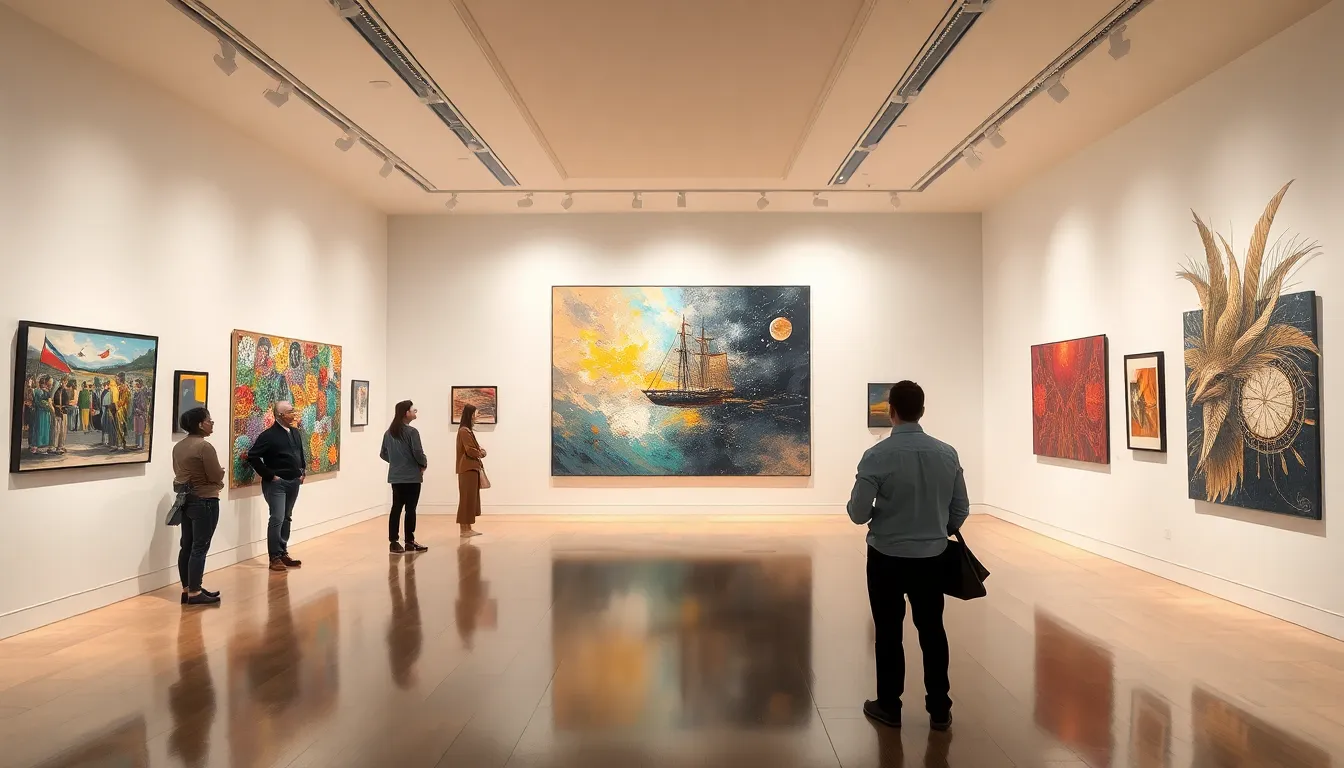
Art isn’t just about splashes of color or the occasional existential crisis; it’s about balance. Imagine walking into a gallery where one side of a painting feels like a chaotic party while the other side is a serene spa retreat. That’s not just creativity; that’s a masterclass in balance!
Balance in art refers to the distribution of visual weight within a composition. This concept is essential for creating harmony and guiding viewer perception.
Definition Of Balance
Balance encompasses an arrangement of elements that ensures stability in artwork. It manifests in two primary forms: symmetrical and asymmetrical. Symmetrical balance involves mirroring elements across a central axis, while asymmetrical balance achieves equilibrium through varied elements that hold equal visual weight. Each type serves a unique purpose in engaging the viewer’s eye and reinforcing thematic content.
Importance Of Balance In Artistic Composition
Balance plays a crucial role in artistic composition, influencing how viewers interact with a piece. Effective balance fosters a sense of order, preventing visual chaos that can distract from the intended message. Artists often manipulate balance to elicit emotional responses or emphasize focal points. By thoughtfully employing balance, creators guide the viewer’s journey through the artwork, enhancing overall appreciation of their craft.
Examples Of Balance In Art
Art utilizes various forms of balance to create harmonious compositions. Each form presents unique opportunities for artists to express stability and evoke emotions.
Symmetrical Balance
Symmetrical balance manifests when elements mirror each other across a central axis. This approach offers a sense of order and rigidity. It often appears in classical architecture, where identical columns support a structure. Artists frequently use symmetrical balance in paintings, providing viewers with clear focal points. Famous examples include Leonardo da Vinci’s “The Last Supper,” where composition relies heavily on symmetrical arrangements.
Asymmetrical Balance
Asymmetrical balance occurs when varied elements achieve visual weight equilibrium without mirroring. This technique creates dynamism and interest in the artwork. Elements can possess different sizes, colors, or shapes while still conveying harmony. Artists like Vincent van Gogh employed asymmetrical balance in “Starry Night,” guiding viewers’ eyes through the vibrant sky while maintaining overall coherence. Asymmetry encourages emotional engagement, making viewers explore the artwork more deeply.
Radial Balance
Radial balance organizes elements around a central point, radiating outward. This form promotes unity and draws viewers into the artwork’s center. Commonly seen in mandalas and flower designs, radial balance captures attention and encourages exploration. Artists leverage this technique in works like Gustav Klimt’s “The Tree of Life,” where spiraling branches guide the viewer’s gaze while conveying interconnectedness. Radial balance effectively creates a mesmerizing focal point, enhancing the visual experience.
Analyzing Famous Works
Famous works of art often showcase balance, demonstrating how artists use various techniques to achieve harmony.
The Last Supper By Leonardo Da Vinci
Leonardo da Vinci’s “The Last Supper” exemplifies symmetrical balance through the arrangement of figures. Central placement of Jesus draws immediate attention, while the disciples mirror each other across the table. Using linear perspective, the viewer’s gaze is naturally directed toward the vanishing point behind Jesus’ head, creating a sense of stability. This composition balances emotional intensity and narrative clarity. Each figure contributes to the overall equilibrium, ensuring harmony in the portrayal of a pivotal moment.
The Birth Of Venus By Sandro Botticelli
Sandro Botticelli’s “The Birth of Venus” demonstrates asymmetrical balance, showcasing the interplay of varied elements. Venus stands gracefully, serving as the focal point, while surrounding figures create visual tension. The placement of Zephyrus and Chloris on one side counterbalances the flowing lines of Venus’ hair and the shell. Dynamic movement leads the viewer’s eye across the canvas, offering an engaging experience. This composition combines beauty and emotion, capturing the essence of mythological themes.
Arrangement In Grey And Black No.1 By James Whistler
James Whistler’s “Arrangement in Grey and Black No.1,” also known as “Whistler’s Mother,” employs subtle balance through careful placement of forms. The figure of the mother sits off-center, creating a strong visual interest. Shades of grey and black harmonize, drawing attention to the figure while allowing the background to recede. The strong diagonal lines of the chair contrast with the softness of the dress, achieving equilibrium. Whistler’s use of tonal balance invites viewers to reflect on the subject’s solemnity and significance.
Conclusion
Balance in art serves as a fundamental principle that shapes the viewer’s experience. By skillfully arranging elements, artists create harmony that resonates on both visual and emotional levels. Whether through symmetrical, asymmetrical, or radial balance, each technique offers unique insights into the artwork’s narrative and intent.
Understanding these forms enhances appreciation for the artist’s craft and the intentionality behind their choices. As demonstrated by iconic works, balance not only stabilizes compositions but also guides viewers on a journey, inviting them to explore deeper meanings. Ultimately, the mastery of balance transforms art into a powerful medium of expression.