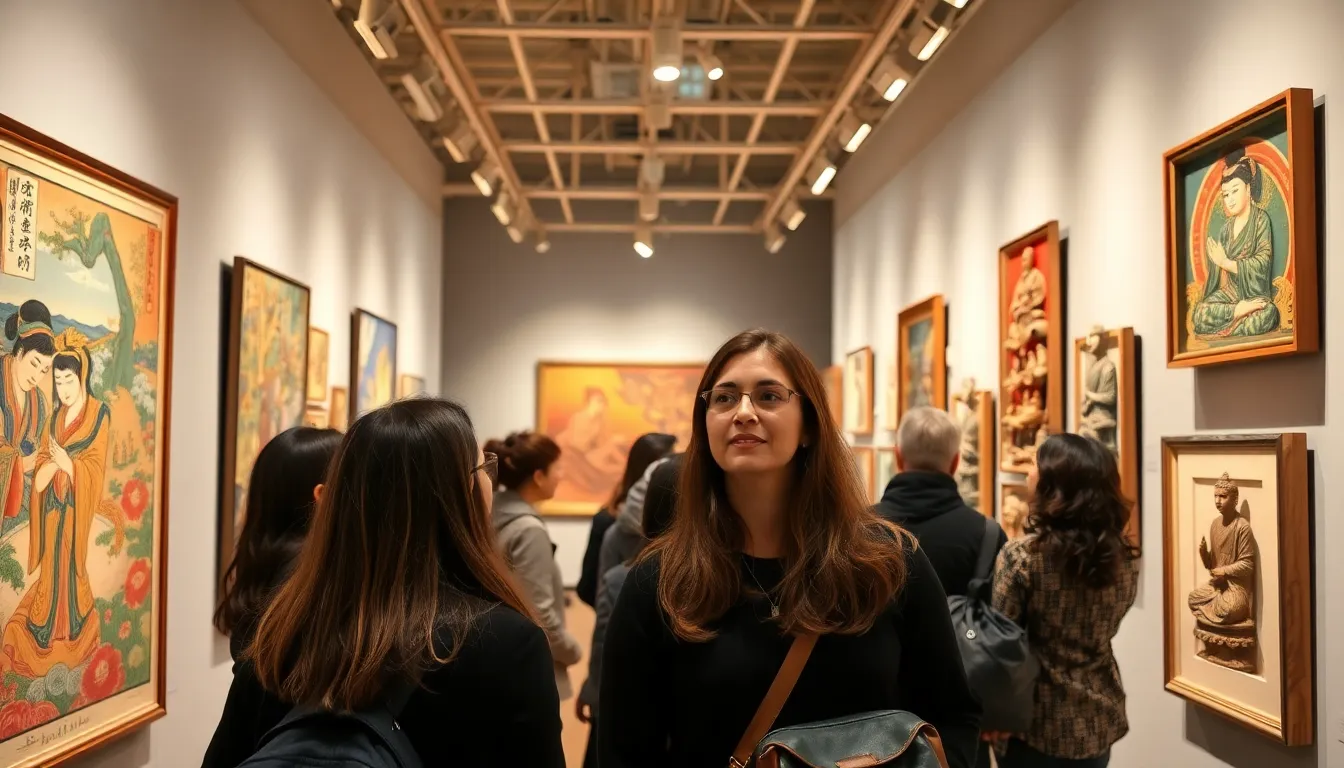
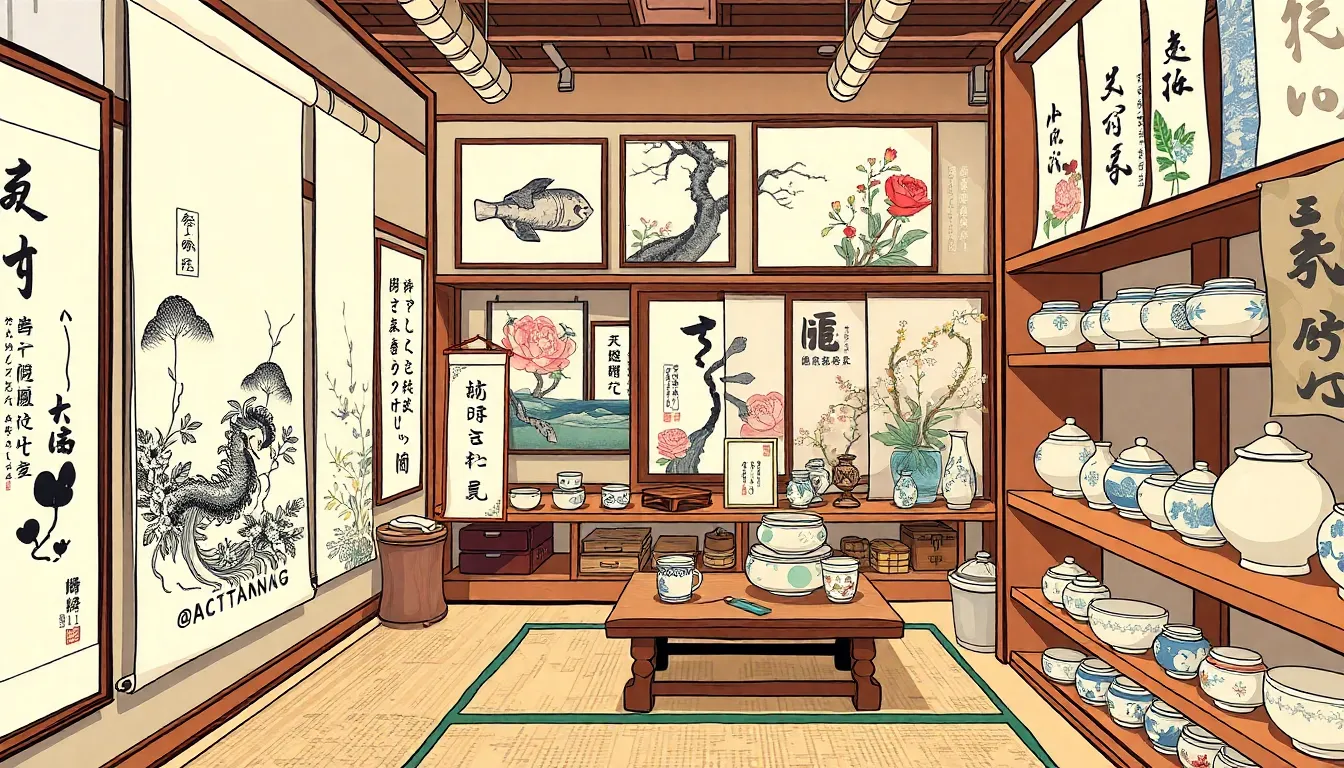
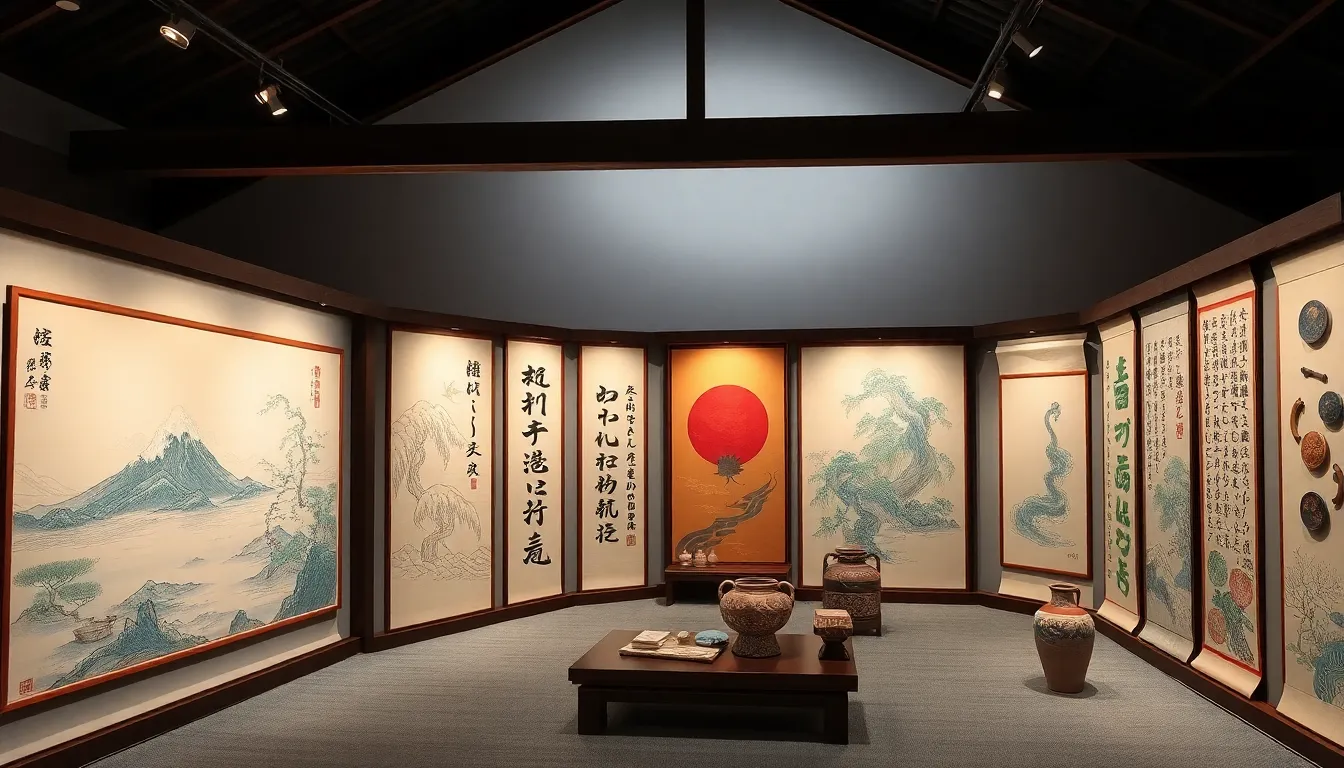
Japanese art is a captivating blend of tradition and innovation that’s sure to leave anyone in awe. From the delicate strokes of ink on rice paper to the vibrant colors of contemporary pieces, it offers a visual feast that’s as rich as a bowl of ramen. Whether you’re an art aficionado or just someone who appreciates beauty, diving into this world can feel like stepping into a time machine where ancient meets modern in the most delightful ways.
Japanese art embodies a rich tapestry of tradition and innovation. This art form showcases various styles and techniques that evolved throughout history, reflecting cultural influences and societal changes.
Historical Context
Historical development marks the journey of Japanese art, spanning centuries. Early forms, like Jomon pottery, emerged around 14,000 BCE, while Buddhist influences arrived in the 6th century CE. During the Heian period, art flourished with distinctive styles in painting and calligraphy. The Edo period introduced ukiyo-e woodblock prints, gaining international recognition. After the Meiji Restoration in 1868, Western influences began shaping contemporary practices. Artists blended traditional techniques with modern sensibilities, reflecting Japan’s dynamic cultural evolution.
Key Characteristics
Key characteristics define Japanese art across its various forms. Simplicity and harmony often dominate the aesthetic, emphasizing balance with nature. Traditional ink paintings feature meticulous brushwork, capturing landscapes and serene scenes. Unique patterns and motifs appear consistently, showcasing cultural symbols such as cherry blossoms and cranes. While gold and vibrant colors highlight contemporary pieces, minimalism remains prevalent. Attention to detail, along with the interplay of light and shadow, enhances visual depth. These elements collectively create a mesmerizing experience for viewers, celebrating both heritage and innovation.
Types of Japanese Art
Japanese art showcases a range of unique styles, deeply rooted in tradition and continually evolving. Art forms reflect cultural significance while highlighting innovations.
Traditional Art Forms
Traditional Japanese art encompasses various techniques that celebrate rich heritage. Ink paintings, known for their meticulous brushwork, often depict landscapes. Calligraphy also plays a vital role, emphasizing fluidity and aesthetic balance. Additionally, pottery from the Jomon period exhibits intricate designs that tell stories of early life. Ukiyo-e woodblock prints gained global recognition during the Edo period, illustrating scenes of everyday life and beautiful landscapes. Ceramics and textiles further showcase the craftsmanship valued in traditional practices.
Contemporary Art Forms
Contemporary Japanese art embraces diverse styles, merging tradition with modern influences. Artists utilize innovative materials and techniques, expanding expressive possibilities. Mixed media, including digital art, gains popularity, showcasing a new generation of creators. Sculpture takes on various forms, from large installations to smaller, intricate pieces. Furthermore, contemporary painters often incorporate vibrant colors alongside traditional motifs. The blend of historical elements with contemporary ideas produces artworks that resonate with global audiences, pushing boundaries while maintaining cultural identity.
Influential Japanese Artists
Japanese art boasts a rich lineage of influential artists whose work shapes both history and modern expression. These artists defined styles and movements, blending tradition with innovation.
Historical Figures
Hokusai, active during the Edo period, is renowned for his iconic woodblock prints, particularly “The Great Wave off Kanagawa.” This piece profoundly influenced Western artists and remains a cornerstone of Japanese art. Another pivotal figure, Yokoyama Taikan, spearheaded the Nihonga movement in the Meiji era, blending traditional Japanese painting methods with Western influences. His works emphasized natural beauty and spiritual themes, earning him acclaim in both Japan and abroad. Artists like these laid the groundwork for future generations, ensuring Japanese artistry’s lasting impact on global culture.
Modern Innovators
In contemporary times, Takashi Murakami stands out for his unique blend of traditional Japanese aesthetics with pop art. His “superflat” movement challenges traditional boundaries, merging high art with commercial culture. Yoshitomo Nara also emerged as a significant voice, with his bold, child-like characters reflecting complexities of childhood and innocence in a modern context. These artists and others continue to redefine Japanese art, pushing boundaries while honoring cultural roots. Through their innovative approaches, they resonate with diverse audiences, ensuring the relevance of Japanese art in today’s global landscape.
Techniques and Mediums
Japanese art features a rich array of techniques and mediums, blending traditional methods with innovative practices. Artists skillfully apply various techniques to express unique cultural narratives.
Painting Techniques
Ink painting serves as a cornerstone of Japanese aesthetics. Artists use ink on rice paper, capturing landscapes with delicate brushwork. Watercolor techniques enhance vibrancy, infusing scenes with life. Nihonga, a modern style, combines traditional materials with contemporary themes, resulting in striking visual narratives. Artistic traditions embrace simplicity and elegance, reflected in the choice of subjects like flower arrangements and seasonal elements. The celebration of nature integrates the harmony of color and form, showcasing depth through the interplay of light.
Sculpture and Ceramics
Sculpture in Japan encompasses diverse styles, from ancient Jomon clay figures to contemporary installations. Traditional ceramics emphasize craftsmanship with techniques like raku firing. Raku pottery, often used in tea ceremonies, reflects spontaneity and texture. Wood sculpture celebrates natural materials and intricacy with figures depicting deities and folklore. Contemporary artists experiment within these forms, blending traditional practices with unexpected materials such as glass and metal. Each piece tells a story, connecting viewers with Japan’s unique cultural heritage through tactile and visual experiences.
Cultural Significance
Japanese art holds profound cultural significance, shaping both national identity and global artistic expressions. This art form not only reflects aesthetic values but also illustrates historical narratives and spiritual beliefs.
Influence on Global Art
Japanese art has inspired numerous international movements and artists. Impressionism, for example, drew heavily from ukiyo-e woodblock prints, leading Western artists to experiment with composition and perspective. Artists like Vincent van Gogh and Claude Monet admired the unique use of color and design, incorporating these elements in their works. Beyond the 19th century, contemporary artists continue to blend Japanese techniques with global artistic trends, fostering a dialogue that enhances creativity across cultures. The global fascination with manga and anime showcases the lasting influence of Japanese art, captivating audiences while merging storytelling with visual appeal.
Preservation of Heritage
The preservation of Japanese art ensures cultural heritage thrives across generations. Traditional techniques are taught in schools and workshops, allowing artisans to pass down skills genuinely. Museums play a vital role by curating collections that celebrate historical and contemporary art forms, promoting understanding and appreciation. Specific festivals, like the Kyoto Cultural Festival, highlight traditional crafts and performances, emphasizing communal connections to heritage. Organizations dedicated to preserving folk arts and crafts work tirelessly to keep ancient practices alive. By maintaining these art forms, Japan cultivates a collective identity while bridging past and present through creativity.
Conclusion
Japanese art stands as a testament to the country’s rich cultural heritage and innovative spirit. The seamless blend of traditional techniques with contemporary expressions creates a dynamic landscape that continues to captivate audiences worldwide. By honoring its historical roots while embracing modern themes, Japanese art remains relevant and influential in the global art scene.
The commitment to preserving these artistic traditions ensures that future generations can appreciate and engage with this vibrant cultural tapestry. As artists push boundaries and explore new mediums, the evolution of Japanese art promises to inspire and resonate for years to come. The journey through its captivating history and ongoing transformation invites everyone to discover the beauty and significance of this remarkable artistic legacy.